

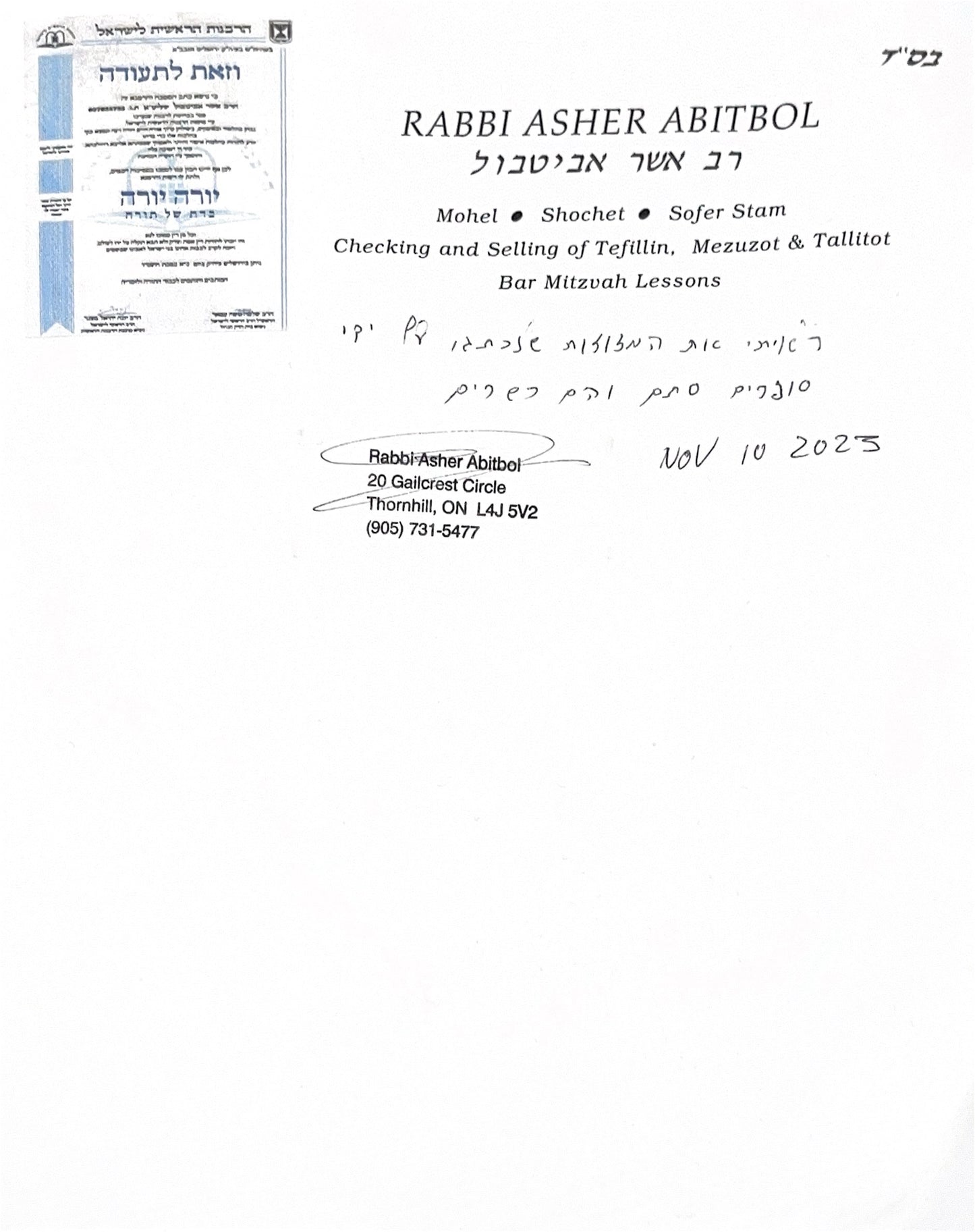
The scroll is Kosher certified, locally sourced, and arrived promptly. Poppsi was very helpful and friendly.


A mezuzah is not the decorative case on your doorframe. It is the small parchment scroll inside it. This is what the mitzvah requires, what it must contain, and how to affix it properly.
כְּלָף
Klaf
The parchment scroll
סוֹפֵר
Sofer
The trained scribe
שַׁדַּי
Shaddai
A Name of God
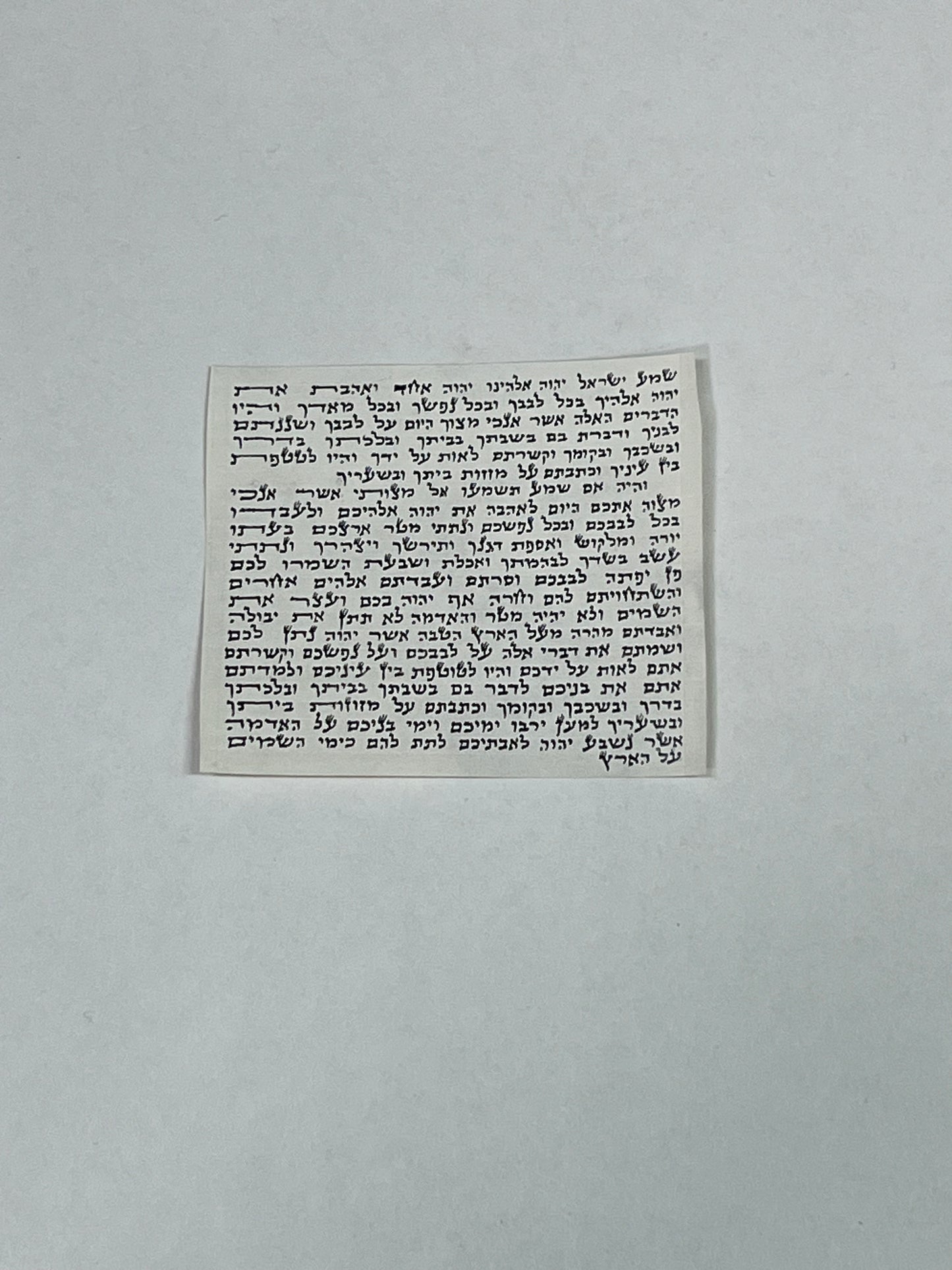
The heart of the mezuzah is the klaf, a small piece of parchment prepared from the hide of a kosher animal and specially processed for sacred writing. On it a trained scribe (sofer) hand-writes two passages from the Torah in black ink, using a quill and the traditional Assyrian script (ktav Ashuri).
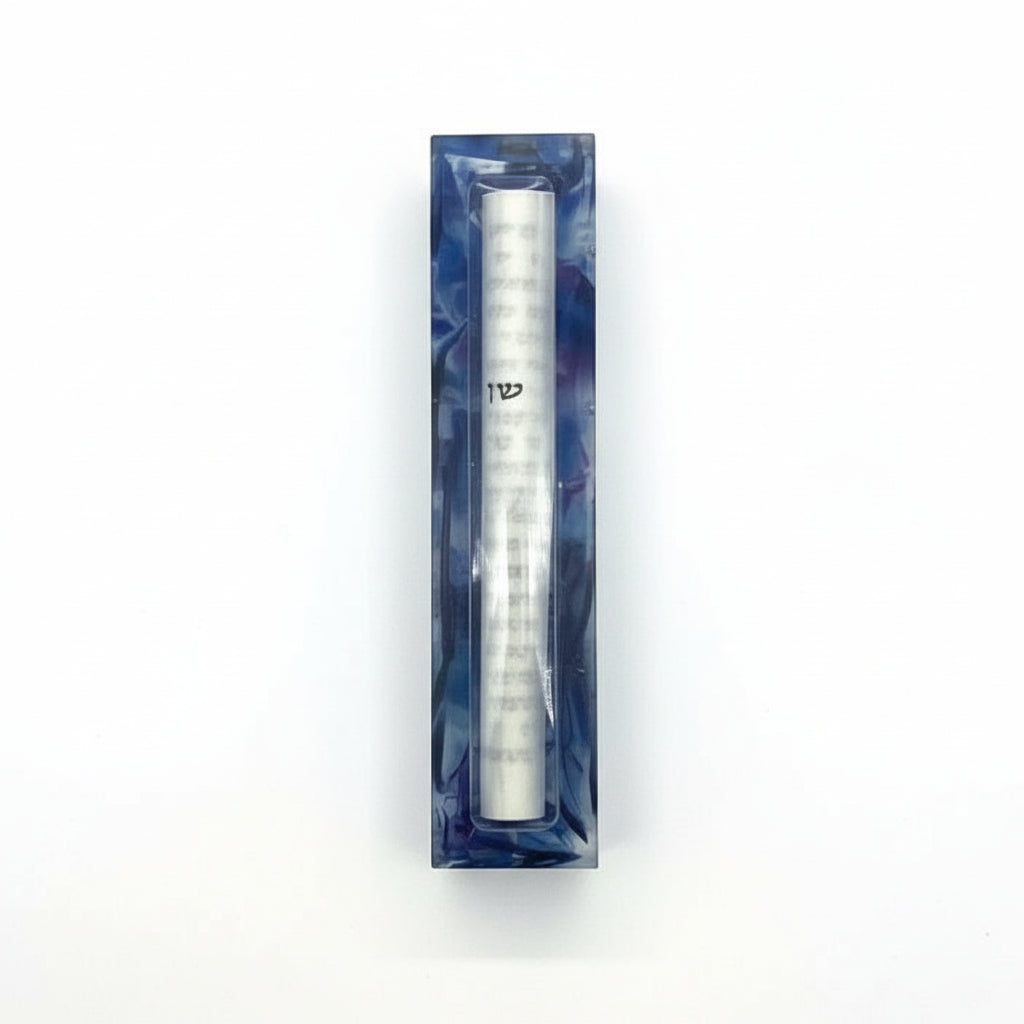
The scroll is rolled from left to right so the text faces inward, and the word שַׁדַּי (Shaddai, a Name of God) is often written on the reverse, visible through the case's small window. The case protects the klaf; the klaf is the mitzvah.
The klaf contains two paragraphs of the Shema, Deuteronomy 6:4–9 and 11:13–21, the declaration of God's oneness and the command that places the mezuzah on the doorpost in the first place. It opens with Judaism's central verse:
שְׁמַע יִשְׂרָאֵל יְהוָה אֱלֹהֵינוּ יְהוָה אֶחָד
"Hear, O Israel: the Lord is our God, the Lord is One." (Deuteronomy 6:4)
Every letter must be present, in order, and legible. It is these exact words, not the design of the case, that make the object holy.
A printed or photocopied scroll is never kosher. Only a hand-written klaf that meets every requirement is valid.
Right-hand side
On the right doorpost as you enter the room or home.
Upper third
In the lower part of the top third of the doorway, within a handbreadth of the outer edge.
Angled inward
In Ashkenazi custom, tilted so the top slants into the room; Sephardim affix it vertically.
A mezuzah is required on the entrance and on nearly every interior doorway of a home, including living spaces and bedrooms, but not on bathrooms or very small rooms. Fix it firmly at both ends so it is attached to the doorpost, not merely hung.
Recited immediately before fixing the mezuzah to the doorpost. When putting up several at once, one blessing covers them all.
בָּרוּךְ אַתָּה יְהוָה אֱלֹהֵינוּ מֶלֶךְ הָעוֹלָם אֲשֶׁר קִדְּשָׁנוּ בְּמִצְוֹתָיו וְצִוָּנוּ לִקְבֹּעַ מְזוּזָה
"Blessed are You, Lord our God, King of the universe, who has sanctified us with His commandments and commanded us to affix a mezuzah."
The mezuzah comes directly from the words of the Shema: "And you shall write them on the doorposts of your house and on your gates." For millennia it has marked a Jewish home, a declaration of faith fixed to the threshold and passed each time one comes and goes.
Many touch the mezuzah and kiss their fingers on passing, a gesture of love and a reminder of God's presence carried from the doorway into daily life.
Consult a qualified rabbi or sofer for questions on specific doorways, customs, and verification.
Overall rating: 5.0 / 5 from 6 reviews.
The scroll is Kosher certified, locally sourced, and arrived promptly. Poppsi was very helpful and friendly.
THEY CAME OUT STUNNING!
Perfect fit. Easy pickup.
The mini mezuzah and scroll are unique, beautiful and exactly what I wanted. I was thrilled with the easy and direct communication I received. I highly recommend this product!!
The scroll fit perfectly in our mini!!
Thank you they look great!